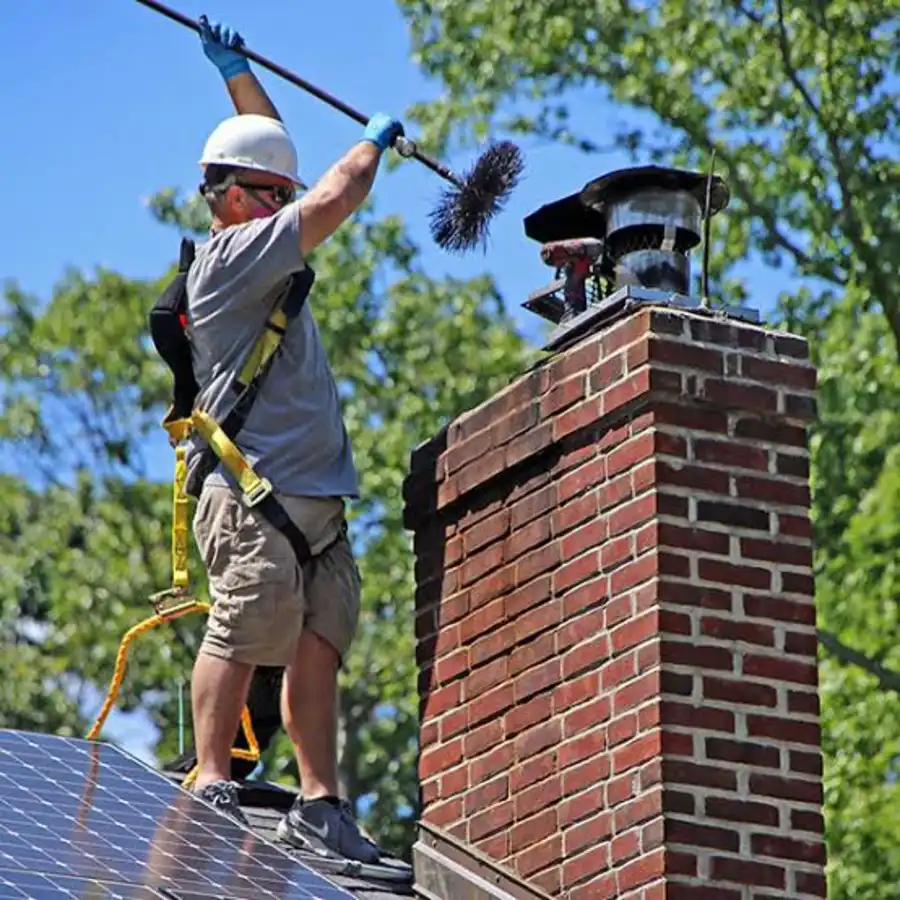
Chimney Sweep Colorado | Cleaning, Inspection & Repair
Colorado asks more of a chimney than almost any other state. A single winter can swing a mountain flue from subzero nights to blazing wood-stove heat, while Denver rooftops take hail, blizzards, and 300 days of intense sun in the same year. Add thin mountain air that changes how fireplaces draft, and you get chimneys that fail in uniquely Coloradan ways. From Aspen cabins to Denver suburbs, our sweeps know what altitude and weather do to a flue.
Colorado Chimney Challenges
Intense freeze-thaw cycles. Colorado high country can see more than 100 freeze-thaw cycles in a single winter, far more than lower elevations. Each cycle wedges water deeper into mortar joints. Mountain town chimneys in Aspen, Vail, and Telluride show spalling and crown failure years ahead of Front Range chimneys.
High-altitude draft problems. At 8,000 feet and above, thin air changes combustion and draft. Fireplaces smoke back, stoves burn sluggishly, and flues that worked fine at sea level suddenly underperform. Proper flue sizing and cap selection matter enormously at altitude.
Heavy snow loads and Denver hail. Deep snow buries chimney caps and crushes chase covers, while spring storms dump wet snow that soaks through every weak point. Along the Front Range, hailstones batter metal caps and flashing. A Colorado chimney needs armor, not just maintenance.
Common Chimney Problems We Fix Across Colorado
Freeze-thaw masonry repair. We repoint shattered joints, replace spalled brick, and rebuild crowns with air-entrained concrete and proper drip edges designed for extreme cycling.
Draft and smoke problems. High-altitude draft issues get diagnosed properly: flue sizing, cap selection, and combustion air. We fix smoking fireplaces instead of just sweeping them.
Snow and ice damage. Crushed chase covers, ice-dammed flashing, and waterlogged crowns are Colorado specialties. We rebuild with materials rated for snow country.
Hail-damaged caps and flashing. Denver metro hail dents and punctures metal chimney components. We replace them with heavy-gauge stainless that shrugs off the next storm.
Creosote removal. Colorado long heating season builds creosote fast, especially in mountain homes burning pine. Annual sweeping is non-negotiable.
From Aspen peaks to Denver suburbs, our certified sweeps handle Colorado toughest chimney conditions. Call (740) 726-5789 today to schedule your chimney cleaning, inspection, or repair.
Colorado Chimney FAQs
Why does my mountain chimney smoke back into the room?
Thin air at altitude weakens draft, and cold flues make it worse. The fix is usually a properly sized flue, the right cap, and sometimes added flue height. A sweep who understands altitude can diagnose it in one visit.
How does altitude affect my fireplace?
Less oxygen means slower, smokier burns and weaker draft. Stoves need more combustion air, and flues often need to be taller than sea-level rules suggest. Burning dry wood matters even more up high.
Do I need a chimney cap in Colorado snow country?
Absolutely. A cap keeps snow out of the flue, blocks downdrafts during blizzards, and stops animals seeking winter shelter. Choose a sturdy stainless cap rated for snow loads, not a flimsy bargain model.
Does intense Colorado sun damage chimneys?
Yes, over time. Intense sun and wide temperature swings dry out sealants and wear down masonry and metal parts, so caps, flashing, and crowns deserve a regular check, especially on chimneys that take the brunt of the sun.
Chimney Sweep Colorado Safety Resources
For a chimney sweep Colorado visit, general safety guidance is a useful starting point. The National Fire Protection Association (NFPA) publishes home fire safety guidance, and the Chimney Safety Institute of America offers chimney safety and inspection information. A chimney sweep Colorado professional can then inspect your flue, cap, crown, and flashing in person, and explain anything found. You can also browse our chimney sweep service areas for statewide coverage. A chimney sweep Colorado check is worth scheduling before winter, when freeze-thaw cycles and long heating seasons put the most stress on masonry.
A chimney sweep Colorado visit is also a good time to check the chimney cap, flashing, and masonry for wear, because a small gap or crack can let water and animals in between visits. A cap that fits well, flashing that seals cleanly, and mortar that is sound all help a chimney stay dry and draw properly through the heating season.