Chimney Cap vs Chimney Crown: What’s the Difference
Homeowners often hear the terms cap and crown used as if they meant the same thing, and that confusion can lead to the wrong repair being quoted, or to a real problem being missed altogether. Understanding the chimney cap vs chimney crown difference matters, because although both parts sit at the top of a chimney and both protect it from water, they do very different jobs, are made from different materials, and fail in different ways. This guide explains the chimney cap vs chimney crown distinction in plain language, so you can describe what you are seeing, understand a technician’s recommendation, and decide what your chimney actually needs.
Chimney Cap vs Chimney Crown: The Basic Difference
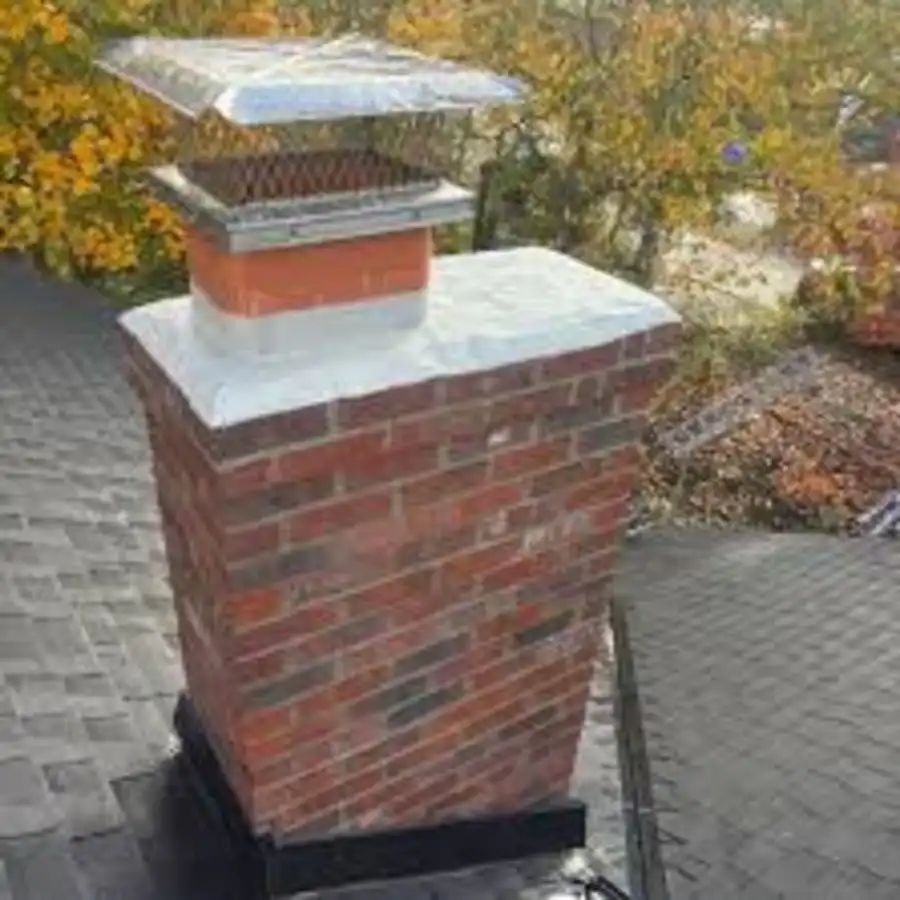
In the chimney cap vs chimney crown comparison, the simplest way to remember the difference is this: the crown is part of the chimney itself, while the cap is a separate cover that sits on top of the flue. The crown is the flat, usually concrete slab that tops a masonry chimney. It spans the whole top of the chimney, slopes slightly outward, and is meant to shed rainwater away from the brick and the flue. The cap, by contrast, is typically a metal cover with a mesh screen that fits over the opening of the flue. Its job is to keep rain, snow, leaves, and animals out of the flue while still letting smoke and exhaust gases escape through the mesh.
Think of the crown as the roof of the chimney and the cap as the lid on the flue. A chimney can have a crown without a cap, and in older homes that is common, but it will be open to rain and nesting animals. A chimney can also have a cap without a sound crown, but then water that lands on the cracked crown will still soak into the brick below, even though the flue itself is covered. That is why, in the chimney cap vs chimney crown question, the answer is rarely either one or the other: most masonry chimneys need both parts in good condition to stay dry.
What Is a Chimney Crown?
A chimney crown, sometimes called a chimney wash or cap slab in older terminology, is the concrete top of a masonry chimney. A well-built crown is poured as a single slab, at least a couple of inches thick at its edges, with a slight slope from the flue outward and a drip edge that throws water clear of the brickwork. It should also have a small gap, sealed with flexible sealant, between the crown and the flue liner, so that heat expansion does not crack it. When a crown is built this way, it protects the top courses of brick from the constant wetting and drying that causes mortar to crumble.
Crowns fail mainly through cracking. Concrete expands and contracts with temperature, and if the mix was weak, the slab was too thin, or water was able to freeze inside small cracks, those cracks widen each winter. Once a crown cracks, water enters the chimney structure directly, and that is a leading cause of chimney leaks. Signs of a failing crown include visible cracks across the top, pieces of concrete flaking off, white staining down the brick, and dampness in the attic near the chimney. Repair options range from sealing small, stable cracks with a flexible crown sealant to rebuilding a badly damaged crown with a new, properly sloped slab, and the right choice depends on how extensive the cracking is.
What Is a Chimney Cap?
A chimney cap is a metal cover, usually stainless steel, copper, or galvanized steel, that fits over the flue opening. Most caps have a solid top, a mesh screen around the sides, and a base that attaches to the flue tile or to the crown. The solid top blocks rain and snow from falling straight down the flue. The mesh screen, typically with openings of about three-quarters of an inch, blocks birds, squirrels, raccoons, leaves, and wind-blown debris, while still allowing exhaust to pass. Some caps also act as spark arrestors, reducing the chance that burning embers escape onto a dry roof.
Caps fail differently from crowns. They rust, especially if they are made from lower-grade steel, they can be bent or blown off in storms, and their mesh can clog with soot or creosote if the chimney is not cleaned regularly. A clogged cap restricts draft, which can push smoke back into the house, and a missing cap leaves the flue wide open to weather and animals. A chimney cap installation should therefore be sized to the flue, made from a durable material suited to the local climate, and installed so that it can be removed for cleaning and inspection. Homeowners who are unsure whether their cap is still sound can ask for it to be checked during a chimney inspection, when the technician is already looking at the top of the system.
Chimney Cap vs Chimney Crown: Side-by-Side Comparison
Comparing a chimney cap vs chimney crown side by side makes the roles clearer. The crown is structural and stationary: it is part of the masonry, it covers the entire chimney top, and it directs water away from the brick. The cap is removable and functional: it covers only the flue opening, it screens out animals and debris, and it keeps rain out of the flue itself. The crown is usually concrete, while the cap is usually metal. The crown is repaired by a mason or chimney specialist using concrete and sealant, while the cap is usually replaced as a complete unit when it rusts or is damaged. Costs also differ: a cap replacement is generally a smaller job, while a crown rebuild is larger, because it involves forming and pouring new concrete at roof height.
Another difference is what happens when each part fails. A failed crown tends to cause slow, hidden damage: water soaks into brick and mortar, freeze-thaw cycles widen cracks, and stains appear indoors months later. A failed cap tends to cause faster, more obvious problems: rain in the firebox, a blocked flue, a bird nest, or smoke backing up into the room. Both failures deserve attention, but they call for different repairs, which is why a clear diagnosis matters before anyone quotes a price. If a contractor recommends replacing the cap when the crown is actually cracked, the leak will continue, and if a contractor recommends rebuilding the crown when only the cap is missing, the homeowner will pay for work that was not needed.
Do You Need Both a Cap and a Crown?
For a masonry chimney, the short answer is yes. The crown protects the structure, and the cap protects the flue, and neither one does the other’s job. A chimney without a cap is an open pipe to the sky, and a chimney without a sound crown is a sponge at the top of the house. Factory-built metal chimneys are different: they use a chase cover or a factory cap system rather than a poured concrete crown, so the terminology and the parts change, but the principle is the same, in that the top of the system must shed water and screen the flue opening. If you are unsure which type of chimney you have, a technician can identify it from the roof or from photos and explain which top components apply to your home.
Maintenance also differs for each part, but both benefit from the same habit: an annual check. During that check, the crown should be examined for cracks and the seal around the flue, and the cap should be examined for rust, secure attachment, and a clear mesh. Keeping gutters clear and trimming branches that overhang the chimney also helps, because falling debris and overflowing water accelerate wear on both parts. When problems are found early, repairs are usually straightforward: resealing a crown, replacing a cap, or repointing a few mortar joints, rather than rebuilding a whole chimney top. For broader context on keeping the whole system in order, it helps to watch for warning signs that a chimney needs attention between inspections.
Choosing the Right Cap and Crown Repair
When you get a recommendation, ask the technician to explain it in terms of the chimney cap vs chimney crown distinction: which part is damaged, what the repair involves, what material will be used, and what warranty applies. For caps, ask about the metal grade, because stainless steel generally outlasts galvanized steel in wet climates, and about the mesh size, because a screen that is too fine can clog with soot. For crowns, ask whether the repair is a surface sealant or a full rebuild, because sealant can be a sensible short-term fix for hairline cracks but is not a substitute for rebuilding a crown that is crumbling. A reputable company will show you photos of the top of your chimney, explain both options when they exist, and put the scope in writing.
Be cautious about quotes that do not distinguish the two parts, or that promise a single coating will fix every chimney-top problem. A coating applied over a cracked crown without addressing the crack, or a cap installed over a flue with a damaged liner, may look finished while the underlying problem continues. The Chimney Safety Institute of America provides consumer information on chimney care through the Chimney Safety Institute of America (CSIA), and it is worth checking that any company you hire follows recognized inspection and safety practices. If your chimney also shows signs of brick or mortar damage, masonry chimney repair may need to be considered alongside the crown work, so that the whole top of the chimney is sound, not just one part of it.
Chimney Cap vs Chimney Crown: Final Takeaways
To recap the chimney cap vs chimney crown difference: the crown is the concrete slab that tops the chimney and sheds water away from the brick, and the cap is the metal cover that protects the flue opening from rain, animals, and debris. The chimney cap vs chimney crown question is therefore not a choice between two alternatives, but a reminder to check both parts. When both are in good condition, your chimney is far more likely to stay dry, draft well, and last for years without major repair. When either one fails, address it promptly, get the diagnosis in writing, and keep up the annual inspections that catch the next problem while it is still small.
Get Your Chimney Top Checked
If you are unsure whether your chimney cap or crown needs attention, Chimney Sweep Spot can inspect the top of your chimney, explain what it finds in plain language, and recommend only the repair that fits the problem. Call (740) 726-5789 today to schedule a chimney inspection and keep your chimney top in good shape.