
7 Warning Signs You Need a Chimney Sweep
Warning Signs You Need A Chimney Sweep is an important topic for any home with a fireplace or wood stove, because a clean, well-inspected flue helps a fire burn safely and draw properly.
A chimney rarely fails without warning. Smoke smell, soot buildup, and drafting problems are your chimney telling you it needs attention before it becomes a fire or carbon monoxide risk. Here are seven signs it’s time to call a sweep — even if it hasn’t been a full year since your last one.
1. A Campfire Smell Inside Your Home
A lingering smoky, sour smell even when there’s no fire lit usually means creosote residue in the flue is reacting to humidity. It’s more noticeable in summer when the air conditioning pulls air down the chimney instead of up. A sweep removes the residue causing the odor.
2. Smoke That Won’t Draw Up the Flue
If smoke keeps rolling back into the room instead of drawing up and out, buildup or a blockage is narrowing the flue’s airflow. It’s not just annoying — it means carbon monoxide and other combustion byproducts aren’t venting properly either. This is one of the signs worth addressing right away, not waiting for your annual sweep.
3. Visible Black, Flaky, or Tar-Like Buildup
Creosote builds up in three stages — from a flaky black soot to a shiny, hardened tar-like glaze. If you can see this coating on the walls of your firebox or flue, it’s already past the safe threshold and is a fire hazard. The third stage is the most flammable and the hardest to remove without professional equipment.
4. Rusty Damper or Firebox Components
Rust on the damper or firebox usually points to excess moisture in the chimney system — often from a damaged or missing chimney cap letting rain in. A sweep and inspection can confirm the source of the moisture, because rust is rarely the only issue; it’s often paired with a deteriorating flue liner or crown.
5. Animal Noises or Nesting Material
Chimneys without a properly fitted cap are an open invitation to birds, squirrels, and raccoons looking for shelter. Scratching sounds, chirping, or a strong animal odor are signs a flue may be blocked with a nest — which is both a fire hazard and, if the animal is trapped, a welfare issue. A sweep can safely remove nesting material and install a cap to prevent it from happening again.
6. White, Chalky Staining on the Masonry
That white, powdery staining on brick is called efflorescence, and it happens when water is moving through the masonry and depositing minerals as it evaporates. It’s a sign of water penetration, which over time weakens mortar joints and can lead to a much costlier masonry or relining repair. An inspection can catch it early, while the fix is still simple.
7. It’s Been More Than a Year — or You’ve Never Had One
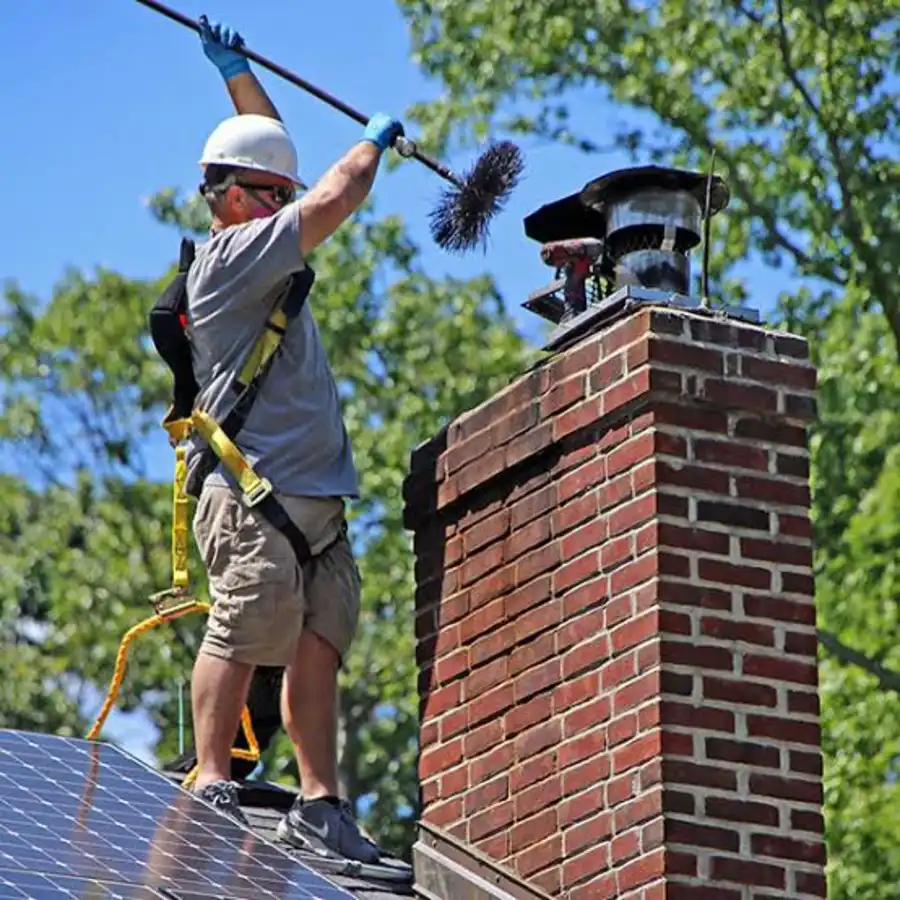
Sometimes the biggest warning sign is simply time. Chimneys don’t send a dramatic signal every year — creosote and wear build up quietly. If it’s been over a year, or you’ve moved into a home and don’t know its chimney history, that alone is reason enough to schedule an inspection.
Warning Signs You Need A Chimney Sweep: safety notes and next steps
For general fireplace and chimney safety guidance, see the National Fire Protection Association (NFPA). Its safety advice is a useful check alongside a professional inspection, especially if you notice smoke, odours, poor draught, or heavy soot build-up. A professional visit usually checks the flue, cap, and flashing, looks for cracked liners and loose mortar, and removes soot and creosote that can catch fire inside the flue.
If you are planning work, explore our chimney sweep services and our service areas to see the help available in your area. See also our guide 7 Signs Your Chimney Needs Cleaning Before Winter for related warning signs.
As a practical rule, a warning signs you need a chimney sweep check once a year, before the main heating season, is a sensible starting point for many homes, with more frequent cleaning if you burn wood regularly or notice heavy build-up. Between visits, watch for white staining on masonry, rust on the damper or firebox, debris in the flue, and smoke entering the room. If any of those appear, stop using the fireplace and call (740) 726-5789 for advice and a free quote.
9 Comments